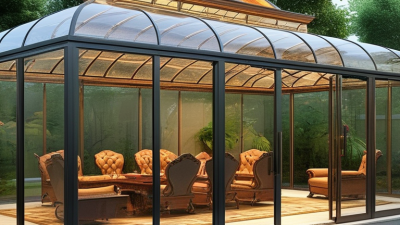
Choosing the right Glass Canopy supplier in 2026 isn’t just about flipping through some pretty project photos. You really need proof of quality, clear technical info, and a supplier you can count on for decent after-sales support. Sure, a canopy might look stunning in a showroom, but how will it hold up when the wind picks up, or the rain, snow, and temperature swings hit? Those little details — like drainage channels, stainless steel fixings, laminated safety glass, and precise measurements — can make all the difference over the long haul.
This guide aims to give you a solid overview of the top glass canopy suppliers based on real-world stuff. We're talking about their design experience, manufacturing quality, certifications, structural calculations, and how they guide you through installation. We also look at how they handle international shipping, custom sizes, replacement parts, and communication across different time zones. A reliable supplier should be upfront about glass thickness, loading assumptions, frame materials, drainage setup, and maintenance — no vague marketing jargon here. It’s worth digging into independent testing results and seeing real project references to get a true feel for what you’re dealing with.
Honestly, no supplier is perfect. Some might have great engineering but limited regional support. Others might get back to you super quickly with a quote but slack when it comes to the technical details. Those differences can really bite you after installation, so it’s best to be cautious. Always ask for samples, detailed shop drawings, warranty info, and a realistic delivery timeline before you sign anything. And don’t forget to double-check local building codes with qualified pros because regulations can vary a lot depending on where you are and the type of project.
The main goal here is to help architects, contractors, developers, and property owners make smarter choices. We focus on what suppliers can actually do — verified skills and real capabilities — rather than just fancy marketing talk. Keep in mind, pricing, availability, and service quality might shift during 2026, so always do your homework and verify everything before moving forward.
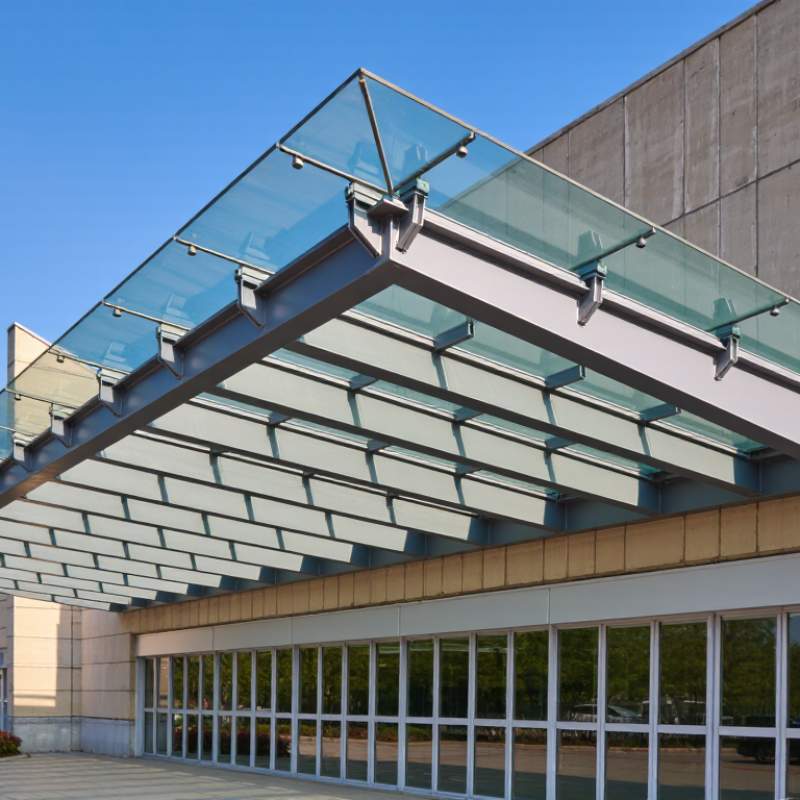
Glass canopies in 2026 range from frameless laminated systems to framed roofs with solar-control glass. Each type serves a different safety and climate requirement. Laminated glass keeps fragments attached after breakage, while heat-strengthened glass improves resistance to thermal stress. Tempered glass is stronger, but it needs careful system design because breakage can occur suddenly. Transparent interlayers also help preserve visibility after impact.
Safety starts with engineering, not appearance. Suppliers should provide structural calculations for wind, snow, seismic movement, drainage, and local maintenance access. The International Energy Agency reports that buildings represent about 30% of global energy demand. Solar-control coatings, shaded entrances, and ventilated canopy cavities can reduce unwanted heat near doors. The 2024 UNEP Global Status Report for Buildings and Construction places buildings and construction at roughly 32% of global energy use and 34% of energy-related carbon emissions. These figures make canopy performance relevant beyond visual appeal.
Global applications include hotel entrances, hospitals, transit stations, retail walkways, and residential towers. Coastal projects need corrosion-resistant fixings and frequent salt inspection. Cold regions require snow-load verification and protected drainage. High-traffic facilities benefit from impact-rated laminated glass and visible edge protection. I would not accept a polished sample as proof of reliability. Installation records, test evidence, cleaning plans, and replacement procedures matter more. One detail is often missed: water. A beautiful canopy can still fail when ponding reaches the entrance.
In 2026, global buyers should evaluate Bent Glass canopies through measurable performance, not appearance alone. The International Energy Agency reported that buildings and construction used about 30% of global final energy in 2022. Therefore, glazing selection affects more than daylight and visual appeal.
U-value measures heat transfer through the glass assembly. Lower values generally reduce indoor heat loss. However, suppliers must state the complete system value, including spacers, frames, and joints. Visible light transmittance shows how much daylight enters the space. A bright entrance may need 55–70% transmittance, depending on orientation and glare control. EN 410 defines these optical measurements. The solar factor, or g-value, indicates the fraction of solar energy entering indoors. Lower g-values can reduce summer cooling demand, especially on south-facing roofs.
Load capacity requires equal attention. Design teams should check dead loads, wind pressure, snow, maintenance access, and possible impact loads under local codes. EN 16612 and ASTM E330 provide useful testing and design references, while ASCE 7 supports site-specific wind evaluation. A canopy should not be judged from glass thickness alone. Curved geometry changes stress distribution. A neat spreadsheet can still mislead. I would request calculation records, test evidence, edge-condition details, and safety-glass classification before approving any supplier. Even then, field installation may expose weaknesses that laboratory data cannot predict.
For global buyers, compliance should guide supplier selection before price. EN 13830 covers curtain wall performance, including air permeability, watertightness, wind resistance, and structural safety. EN 12150 defines requirements for thermally toughened safety glass. Ask for tested glass thickness, heat-soak evidence, and traceable batch records. ASTM E330 adds a practical benchmark for uniform static pressure resistance. It helps verify how a canopy behaves under wind loading, not only in a showroom. Testing must match the project’s location and engineering calculations.
The International Energy Agency’s 2024 buildings analysis states that buildings consume about 30% of global final energy. This strengthens demand for controlled daylight and durable glazing systems. ISO’s 2023 Survey recorded more than 1.2 million ISO 9001 certificates worldwide. Certification alone proves little, however. Review the certificate scope, audit status, factory controls, and corrective-action history. A supplier may hold ISO 9001 while subcontracting critical fabrication without clear oversight. That is an uncomfortable risk.
Tips: Request recent EN 13830 and ASTM E330 test reports. Confirm the tested assembly matches your frame, glass, seals, and fixing method. Check EN 12150 markings on delivery documents. Visit the production site when possible. Small documentation gaps matter. I would also require wind-load calculations from an independent engineer, because generic tables can mislead on coastal or high-rise projects. Suppliers should explain exclusions plainly, even when their answer sounds less impressive.
Global buyers should compare glass canopy suppliers through measurable evidence, not polished brochures. Capacity means more than factory size. Ask for monthly laminated-glass output, CNC cutting capability, steel or aluminum fabrication space, and recent project references. A supplier producing 5,000 square meters monthly may still struggle with a custom Glass Door interface or curved panels.
Certifications require careful checking. The ISO Survey 2022 recorded more than 1.2 million ISO 9001 certificates worldwide, but certification alone does not prove installation quality. Request the certificate number, scope, expiry date, and issuing body. For structural systems, verify relevant testing against standards such as EN 1090, ASTM, or local building codes. Glass reports should identify thickness, interlayer type, heat treatment, and impact performance. Small omissions become expensive on site.
Lead times should be separated into design approval, sampling, production, testing, packing, and shipping. The World Bank’s 2023 Logistics Performance Index shows major differences in customs efficiency and delivery reliability between countries. Request a dated production schedule, not “fast delivery.” In practice, complex canopies often need eight to twelve weeks after approved drawings, excluding port delays. That estimate can change. I would also ask for a contingency plan, replacement-glass procedure, and inspection photos before loading. A low quotation may hide weak documentation, and I have learned that assumption is not a procurement strategy.
Benchmark comparison by monthly production capacity, certification coverage, and typical export lead time.
These planning benchmarks represent common supplier capability ranges used in international architectural-glass sourcing. Capacity is measured in square metres per month, certification coverage reflects the share of commonly requested quality, environmental, structural, and product documentation available, and lead time covers production plus standard export preparation. Buyers should verify current certificates, factory capacity, and project-specific delivery schedules directly.
For global buyers comparing the 2026 best Glass Roof suppliers, the quoted price is only a starting point. Glass often represents 25–40% of the material budget, depending on thickness, coating, shape, and safety performance. Laminated low-e glass may cost more, but it can reduce heat gain and improve occupant comfort. Ask suppliers for tested performance data, not attractive samples alone.
Frames usually add another 20–30%. Aluminium sections, thermal breaks, finishes, and drainage details affect this figure. Engineering fees can range from 5–12% of the project value. Complex spans require structural calculations, wind-load checks, connection drawings, and local review. A reliable supplier should explain assumptions clearly. Vague allowances create expensive surprises.
Freight depends on crate size, port handling, insurance, and delivery distance. Oversized panels need stronger packaging and careful route planning. Installation may cost 15–30%, especially when cranes, access equipment, or night work are required. On one project, an early quote excluded temporary lifting equipment. The final budget changed sharply. That mistake was avoidable. Request a complete cost schedule with exclusions, installation limits, replacement-glass procedures, and warranty terms. Keep a contingency for site changes. Small details matter.
A reliable glass canopy supplier must prove more than attractive photographs. Request dated test reports for the exact glass build-up, framing system, fixings, and sealants. Check whether reports cover wind pressure, impact, water penetration, thermal performance, and repeated loading. For laminated or Glass Block elements, confirm thickness, interlayer type, edge protection, and replacement procedures. Standards matter. Ask laboratories to identify the testing method, specimen size, conditioning process, and report validity.
Paperwork can still mislead.
Warranty review needs equal attention. Confirm who covers glass, hardware, coatings, installation defects, and consequential water damage. A ten-year warranty may exclude sealant failure, coastal exposure, poor drainage, or unauthorized cleaning. Request three completed projects with similar spans, climate, and traffic conditions. Speak with the owners, not only the supplier’s sales contact. Ask for installation dates, repair history, leakage incidents, and response times. Photographs are weak evidence.
The 2024 Arcadis Global Construction Disputes Report reported an average global dispute value of about US$52.6 million and a duration of 13.4 months. Those figures show why early verification matters. Keep one unresolved issue visible: many reports test materials, not the complete canopy assembly. Require project-specific engineering calculations, site inspection records, and clear responsibility for remedial work. A supplier who welcomes uncomfortable questions is usually easier to trust.
| Due-Diligence Area | Information to Request | Minimum Evidence or Acceptance Criteria | How a Buyer Should Verify It | Priority | Red Flag |
|---|---|---|---|---|---|
| Glass Product Identification | Exact glass build-up, thickness, interlayer type, heat treatment, edge finish, maximum panel dimensions, and mass per square metre. | The quotation and drawings should identify whether the panel is monolithic toughened glass, heat-strengthened laminated glass, or fully tempered laminated glass. Generic wording such as “safety glass” is insufficient. | Match the quotation, shop drawings, packing labels, and delivery inspection records. Confirm that the specified build-up is consistent with the structural calculations. | Critical | Glass type changes after order approval without written engineering review. |
| Safety Glazing Standard | Applicable product standard and test documentation for the glass supplied to the destination market. | Common evidence includes EN 12150 for thermally toughened soda-lime safety glass, EN 14449 for laminated glass, EN 12600 pendulum-impact classification, ASTM C1048 for heat-treated flat glass, ASTM C1172 for laminated architectural flat glass, or ANSI Z97.1 / 16 CFR 1201 where applicable. | Check the standard number, revision, product description, test specimen, laboratory identity, and validity. Confirm that the report covers the actual glass construction rather than a similar product. | Critical | A certificate lists only a factory name or logo but no test method, specimen details, or laboratory signature. |
| Structural Engineering | Project-specific calculations for wind, snow, seismic, dead load, impact, glass deflection, fixings, and supporting structure. | Calculations should use the project location, canopy geometry, support spacing, glass properties, edge conditions, and governing local building-code loads. Design responsibility must be clearly assigned. | Have an independent structural engineer review the calculation package before fabrication. Compare reaction loads with the capacity of the host wall, steelwork, anchors, and fasteners. | Critical | Supplier provides a standard drawing without site loads, support reactions, or engineer authorization. |
| Interlayer Durability | Interlayer material, thickness, compatibility statement, moisture-control design, and environmental suitability. | The interlayer should be suitable for the specified temperature, humidity, UV exposure, and edge condition. The supplier should explain compatibility with silicones, setting blocks, gaskets, and metal contact materials. | Request the interlayer technical data sheet and compatibility letters from the sealant and accessory manufacturers. Review edge cover, drainage, and water-management details. | Critical | Interlayer is described only as “clear film” or is substituted without updated durability documentation. |
| Metalwork and Corrosion Protection | Material grades, finish specification, weld procedure, surface treatment, fastener grade, and galvanic-isolation details. | Drawings should identify stainless steel, aluminum, galvanized steel, or painted steel grades and the intended exposure class. Dissimilar metals should be isolated where galvanic corrosion may occur. | Check mill certificates, coating or passivation records, weld inspection records, and material markings. Inspect sample finish panels before production. | Critical | “Stainless steel” is specified without grade, finish, or fastener compatibility requirements. |
| Waterproofing and Drainage | Flashing, sealant joints, drainage paths, end dams, gutter details, and interface with the building envelope. | The design should prevent standing water at laminated-glass edges and direct runoff away from doors, walls, electrical equipment, and pedestrian routes. | Review enlarged interface details and conduct a controlled water test after installation. Confirm that the test method, duration, and acceptance criteria are recorded. | Critical | Waterproofing is left to site improvisation or relies only on a bead of sealant. |
| Testing Laboratory Independence | Full laboratory report, accreditation details, test date, sample identification, and chain of custody. | Prefer reports issued by a competent, independent laboratory with a recognized accreditation scope. The report should identify the tested assembly and report any failures or limitations. | Verify the laboratory accreditation directly through the relevant national accreditation body and confirm that the report number is genuine. | Critical | Only an undated “certificate of compliance” is supplied, with no complete report or traceable laboratory information. |
| Factory Quality Control | Incoming-material inspection, heat-treatment records, dimensional checks, visual inspection, packing procedure, and nonconformance process. | Quality records should be traceable to the project, panel number, production date, batch, and approved drawing revision. Heat-treated glass should not be cut, drilled, or edge-worked after tempering. | Request a sample inspection and a factory quality plan. Audit a small sample of records against physical panel markings and shipping documents. | High | Records are generic, unsigned, or cannot be linked to individual panels. |
| Packaging and Logistics | Crate design, separators, edge protection, moisture control, lifting points, Incoterms, and delivery schedule. | Packaging should prevent glass-to-glass contact, edge impact, abrasion, and water accumulation. Crates should be suitable for the agreed transport mode and clearly marked with orientation and lifting instructions. | Approve crate drawings and packing photos before dispatch. Define inspection, damage-notification, and replacement procedures in the purchase contract. | High | Supplier disclaims transit damage despite controlling packaging and delivery arrangements. |
| Installation Method Statement | Sequence of works, lifting plan, temporary supports, setting blocks, torque values, sealant preparation, weather limits, and protection measures. | The method should prevent point loading, uncontrolled glass movement, contamination of bonding surfaces, and premature loading of sealants or anchors. | Require site-specific method statements and installer competency records. Record torque checks, glass condition, and sealant batch numbers during installation. | Critical | Installation is assigned to untrained labor without a documented lifting or temporary-support plan. |
| Warranty Coverage | Separate warranty periods for glass, laminated interlayer, metal finish, sealants, hardware, leakage, and workmanship. | Warranty wording should define duration, exclusions, inspection obligations, response time, remedy, and whether labor, access equipment, removal, replacement, and reinstallation are included. A single “overall warranty” is not enough. | Obtain the signed warranty before purchase order issue. Check that the warranty provider, governing law, start date, and claim process are clearly stated. | Critical | Warranty is conditional on unspecified maintenance or excludes consequential access and replacement costs without negotiation. |
| Typical Warranty Benchmark | Commercial benchmark for negotiation, not a universal legal requirement. | Buyers commonly seek approximately 5–10 years for workmanship and waterproofing, with separate periods negotiated for coatings, sealants, hardware, and laminated-glass durability. The final period must be written into the contract. | Compare warranty duration with project exposure, access difficulty, design life, and local consumer or construction law. Do not treat an advertised period as proof of performance. | High | Warranty duration is quoted verbally or begins at an unclear date. |
| Project References | Comparable completed projects, installation dates, climate, canopy size, glass build-up, support system, and client contact permission. | References should include at least two genuinely comparable installations, preferably with different environmental conditions or project constraints. Recent completion alone does not demonstrate long-term durability. | Contact the owner, architect, or main contractor independently. Ask about leakage, glass breakage, discoloration, corrosion, call-back frequency, and warranty response. | High | Only showroom photographs or undisclosed third-party images are provided. |
| Financial and Contractual Due Diligence | Company registration, insurance, payment terms, subcontractor responsibility, limitation of liability, and dispute-resolution clause. | The contracting entity should be identifiable, adequately insured, and financially capable of supporting warranty obligations. Scope boundaries between supplier, installer, and local contractor must be explicit. | Verify registration and insurance documents through official or insurer-issued records. Use milestone payments linked to approved drawings, testing, delivery, and completion. | High | Payment is requested to an unrelated entity or the supplier refuses to identify the party responsible for warranty claims. |
| Final Acceptance and Handover | As-built drawings, test certificates, maintenance manual, spare parts list, cleaning guidance, inspection checklist, and defect log. | Handover should document panel identification, approved materials, sealant batches, anchor records, water-test results, outstanding defects, and warranty start date. | Make final payment conditional on a signed handover pack and closure of agreed defects. Photograph concealed interfaces before they are covered. | Critical | Supplier requests final payment before testing, document delivery, or correction of visible defects. |
Choosing a trusted China laminated glass supplier is essential when safety, durability, and appearance are equally important. High-quality laminated glass is produced by bonding two or more glass layers with a strong interlayer, such as polyvinyl butyral or ionoplast. If the glass breaks, the interlayer helps hold the fragments in place, reducing the risk of dangerous shards scattering and maintaining a safer barrier. This makes laminated glass suitable for facades, doors, partitions, skylights, railings, and other architectural applications.
When evaluating suppliers, buyers should examine factory experience, production technology, quality-control procedures, and the consistency of raw materials. A reliable manufacturer should be able to provide clear product specifications, customized sizes, suitable thickness combinations, edge-processing options, and performance information for different projects. It is also important to confirm packaging standards, delivery capability, and communication throughout the ordering process. Suppliers with well-equipped facilities and experienced technical teams can better support both safety-focused and decorative designs.
A dependable China-based factory should treat every project as a combination of protection, performance, and visual quality. By selecting laminated glass manufactured with advanced bonding methods and carefully controlled processes, customers can obtain a durable safety-glass solution that supports long-term use while preserving natural light and architectural style.
Check EN 13830 for curtain wall performance, including air, water, wind, and structural safety.
Request glass thickness, heat-soak evidence, batch records, and delivery markings.
A tested assembly may not match your frame, seals, glass, or fixing method.
Ask for monthly laminated-glass output and available cutting equipment.
Request the certificate number, scope, expiry date, and issuing organization.
Separate design approval, sampling, production, testing, packing, and shipping.
Ask for inspection photographs, packing details, and replacement-glass procedures.
Visit when possible, especially for large or technically complex projects.
This guide explains how global buyers can evaluate Glass Canopy solutions in 2026, from framed and frameless designs to laminated, insulated, and specialty glass systems. It examines their roles in weather protection, daylight control, thermal performance, safety, and architectural appearance across commercial, residential, transport, and public projects. Key selection criteria include U-value, visible light transmission, solar factor, glass thickness, and load capacity, all of which influence comfort, energy use, durability, and structural reliability.
The article also outlines essential standards and quality indicators, including EN 13830, EN 12150, ASTM E330, and ISO 9001. Buyers will learn how to compare suppliers by manufacturing capacity, engineering expertise, certifications, production schedules, shipping capability, and installation support. A practical cost framework covers glass, framing, design, testing, freight, and installation, while a due diligence checklist highlights the importance of verified test reports, clear warranties, quality-control records, and relevant project references before placing an international order.