
Leave Your Message
0%

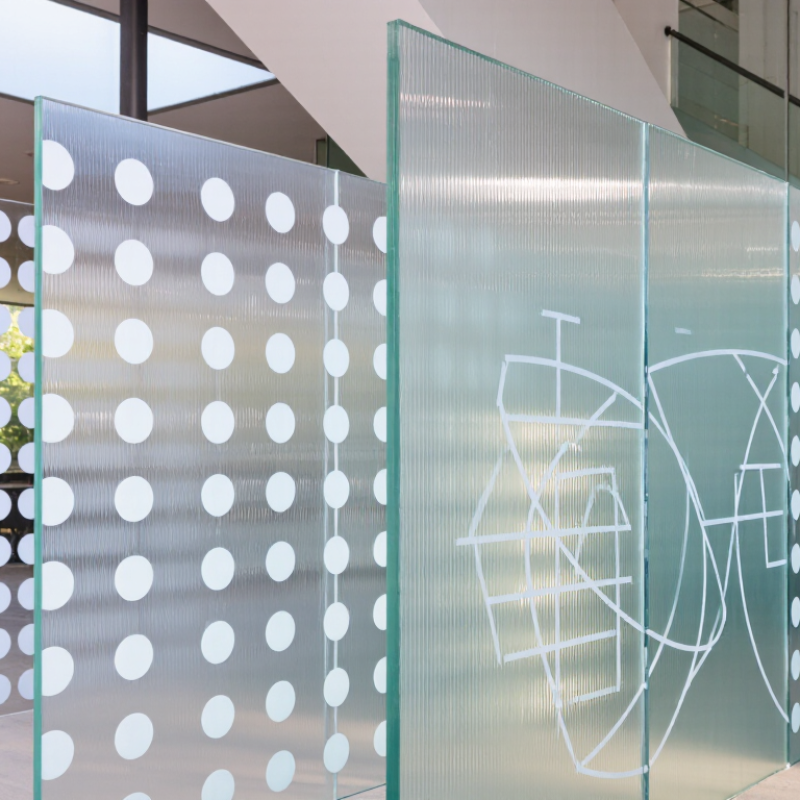
What Is Fritted Glass and How Is It Used? This guide introduces a glass material combining visual texture, solar control, and architectural performance. Fritted Glass contains ceramic particles fused permanently onto its surface during controlled heating. The result can resemble dots, lines, grids, or softly printed patterns. It is not ordinary decorative paint. The frit becomes part of the glass surface.

James Carpenter, founder of James Carpenter Design Associates, has said, “Glass is not a material that you look at; it is a material that you look through.” His observation helps explain Fritted Glass in practical terms. Patterned surfaces can soften daylight while preserving selected views. They can also reduce glare and make transparent façades easier to read. A conference room may receive filtered sunlight instead of harsh reflections. A stair enclosure may gain privacy without becoming visually heavy.

Designers use Fritted Glass in façades, doors, partitions, skylights, and balustrades. Pattern density matters. Dense coverage can improve privacy, but it may reduce daylight and exterior connection. Ceramic colors also change with viewing distance and weather. Samples should be tested beside the intended frame, lighting, and surrounding materials. Small details matter.

The process still has limitations. Thermal movement, cleaning methods, edge conditions, and safety requirements need professional review. Fritted Glass is not a universal solution. That assumption deserves correction. A successful specification balances appearance, performance, fabrication capability, and long-term maintenance. This article explores those decisions through practical examples, technical considerations, and honest design trade-offs.
What Is Fritted Glass and How Is It Used?

Definition and Basic Characteristics of Fritted Glass

What Is Fritted Glass and How Is It Used?

Definition and Basic Characteristics of Fritted Glass

Fritted glass is made by firing ceramic particles onto a glass surface. The heat bonds the frit permanently to the substrate. Its texture may appear as dots, lines, bands, or custom patterns. The coating can soften glare, limit visibility, and reduce solar heat gain. It also adds visual rhythm to façades, doors, partitions, and stair enclosures.

Unlike surface films, ceramic frit usually resists peeling, fading, and routine cleaning damage. Bent Glass can use the same treatment on curved panels, although pattern distortion requires careful engineering. Frit density controls performance. A dense pattern provides stronger privacy, while a sparse pattern preserves more daylight. The final appearance changes with viewing distance and interior lighting.

The International Energy Agency reported in Buildings 2023 that buildings consumed about 30% of global final energy in 2022. This figure does not prove that fritted glass saves energy by itself. Orientation, insulation, glass coating, and shading remain decisive. A useful design review should therefore compare visible light transmission, solar heat gain coefficient, and glare risk. Too much frit can make a bright room feel dull. Too little may leave occupants uncomfortable. That trade-off is easy to underestimate. Sample panels should be viewed outdoors before approval.

How Fritted Glass Is Manufactured

Fritted glass is made with small particles of glass, called frit, fused onto a flat glass sheet. The process begins by selecting compatible glass and ceramic materials. These materials are melted at high temperatures, rapidly cooled, crushed, and screened into controlled particle sizes. The powder may then be mixed with mineral pigments or binding agents. Particle size affects the final texture, color, and light transmission.

The glass sheet is cleaned carefully before printing or coating. Frit is applied through a screen, roller, or digital system, depending on the design. The coated sheet enters a tempering furnace, where heat softens the glass and bonds the frit to its surface. Cooling must be controlled. Uneven heating can create distortion, weak areas, or visible color differences. Small errors matter. The process sounds tidy, but it is not always predictable.

Manufacturers inspect the surface for pinholes, scratches, poor adhesion, and inconsistent patterns. They also test dimensions, optical performance, and thermal strength before installation. Fritted glass can provide privacy, solar control, and decorative detail in façades, partitions, stairways, and a Glass Door. Its performance depends on the frit composition, printed coverage, and building orientation. Designers should confirm technical data rather than judge the material by appearance alone.

How Fritted Glass Is Manufactured

Fritted glass is produced by melting a glass batch, rapidly cooling it into small glass particles, milling the particles to a controlled size, applying them to a glass surface, and firing the coating until it bonds. The chart shows representative temperatures used during key thermal stages.

Typical process temperatures vary with glass composition, frit particle size, coating thickness, and the intended application.

Main Types and Surface Patterns of Fritted Glass

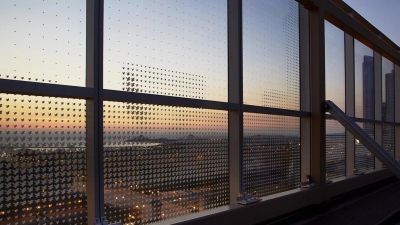
Fritted glass is made by bonding fine glass particles to a glass sheet through controlled heating. The process creates a durable, baked-in surface rather than a removable coating. Common types include ceramic frit glass, digitally printed frit glass, and patterned frit glass. Ceramic frit usually offers strong durability and stable color. Digitally printed frit allows detailed images, gradients, and repeated graphics. Patterned frit uses standard dots, lines, bands, or geometric forms.

Surface patterns affect more than appearance. Dense dot patterns can soften glare and improve privacy near meeting rooms or street-facing windows. Horizontal lines may reduce visual distraction while preserving daylight. Gradient patterns change gradually from opaque to clear, which works well on façades, partitions, and stair enclosures. Small dots are often used for visual contrast on large transparent surfaces. Yet pattern performance depends on spacing, glass orientation, lighting, and viewing distance. A sample can look perfect indoors but appear too weak under direct sunlight.

Tips: Request a full-size sample when possible. Check it from both sides. Compare it in morning and afternoon light. Confirm the printed side and installation direction with the fabricator. Also review thermal and safety requirements before specifying the glass. A darker pattern is not automatically better; it may reduce daylight more than expected. That detail is easy to miss. Surface texture can also collect dust, although fused frit remains easier to maintain than many applied films.

What Is Fritted Glass and How Is It Used? - Main Types and Surface Patterns of Fritted Glass

Category Type or Surface Pattern How It Is Made Visual and Functional Characteristics Common Applications Important Considerations
Material Definition Fritted glass Small particles of glass, known as frit, are applied to a glass substrate and heated until they fuse permanently to the surface. Creates a durable, textured, translucent, or opaque surface while retaining the basic form of the glass sheet. Architectural façades, interior partitions, doors, screens, signage, and decorative panels. The final appearance depends on frit size, application method, firing temperature, coverage, and glass substrate.
Main Type Transparent or low-coverage frit A relatively small amount of frit is distributed over the glass, leaving substantial clear areas. Produces subtle decoration, partial shading, and a lightly textured appearance with high visual transparency. Daylight-control zones, feature windows, privacy bands, and decorative glazing. Provides less privacy and solar control than dense or fully covered patterns.
Main Type Translucent fritted glass Frit is applied at a coverage level that diffuses transmitted light without making the panel fully opaque. Softens views and reduces glare while allowing daylight to enter. Office partitions, shower enclosures, healthcare interiors, and room dividers. Privacy depends on coverage, frit color, light direction, and viewing distance.
Main Type Opaque fritted glass A dense, continuous frit layer is fused to the glass surface. Blocks direct views and provides a strong, uniform finish with limited or no light transmission through the coated area. Spandrel areas, façade accents, privacy panels, wall cladding, and decorative features. Opaque areas can absorb more solar energy; thermal design should account for the selected glass and installation system.
Main Type Colored fritted glass Frit made with ceramic pigments is applied before firing, allowing the color to fuse with the glass surface. Offers stable decorative color and can be combined with solid areas, gradients, or repeated motifs. Retail interiors, public buildings, feature walls, façades, and wayfinding elements. Color appearance varies with frit coverage, substrate color, reflected light, and viewing conditions.
Surface Pattern Dots and circular patterns Round frit particles or printed circular motifs are arranged individually or in repeated fields. Creates a clean, regular appearance and can control visibility and solar exposure through pattern density. Glazed façades, office partitions, doors, bird-safe glazing treatments, and decorative windows. Dot size, spacing, and percentage of coverage determine the balance between transparency and visual screening.
Surface Pattern Lines and stripes Frit is applied in continuous, parallel, curved, or intersecting bands. Creates directional emphasis, visual rhythm, and partial privacy; horizontal lines can reduce direct solar exposure when properly designed. Curtain walls, balustrades, partitions, stair enclosures, and interior feature glazing. Pattern orientation and spacing influence sightlines, daylight, and the perceived width or height of a space.
Surface Pattern Gradient or fading pattern Frit coverage gradually changes from sparse to dense across the glass panel. Provides a smooth transition between clear and private zones while creating a contemporary visual effect. Ground-floor glazing, office fronts, entrance doors, skylights, and privacy screens. Accurate control of the transition is important for consistent appearance across adjacent panels.
Surface Pattern Geometric pattern Frit is arranged in squares, rectangles, triangles, grids, or other repeated geometric layouts. Combines decoration with controlled transparency and can support architectural branding without relying on a specific company identity. Interior screens, lobby walls, façade panels, elevators, and decorative doors. Complex layouts require careful alignment during fabrication and installation.
Surface Pattern Organic and custom pattern Frit is applied in irregular, flowing, botanical, abstract, or digitally prepared designs before firing. Creates a distinctive artistic surface and can soften views or distribute daylight in a less formal way. Hotels, cultural buildings, restaurants, residential interiors, and public art installations. Custom designs should be reviewed as full-size samples because scale and viewing distance affect the result.
Surface Finish Textured or raised frit surface Relatively coarse frit particles are fused to the surface, creating a tactile relief. Diffuses light, adds visual depth, and may improve resistance to casual marking compared with a smooth printed surface. Decorative partitions, wall panels, screens, doors, and feature installations. Cleaning requirements may be higher because dust can collect in the texture.
Performance Option Fritted tempered glass The frit is fused during ceramic processing, and the finished sheet is heat-treated to improve mechanical strength. Provides a durable decorative surface with improved resistance to thermal and mechanical stress compared with annealed glass. Doors, partitions, balustrades, façade glazing, and other areas requiring safety glazing. Heat treatment may introduce visual characteristics such as slight roller wave or anisotropy; specifications must be checked for the project.
Performance Option Fritted laminated glass One or more glass layers are combined with an interlayer; the frit may be located on a protected glass surface or used as part of a laminated design. Can provide safety retention after breakage, sound-control options, and additional design flexibility. Overhead glazing, safety partitions, façades, balustrades, and areas requiring enhanced post-breakage performance. Layer arrangement, edge protection, interlayer selection, and compatibility with the frit system are essential.
Key Benefit Daylight and solar control Pattern density and frit color are selected to intercept or diffuse part of the incoming solar radiation. May reduce glare and help manage daylight while preserving selected transparent areas. Sun-exposed façades, skylights, atriums, and large glazed openings. Frit is not a substitute for complete façade energy analysis; orientation, glazing type, shading, and climate also matter.
Key Benefit Privacy and visual screening Dense, translucent, or strategically patterned frit reduces direct visibility through the glass. Balances privacy with daylight more effectively than a fully opaque wall in many interior applications. Bathrooms, meeting rooms, healthcare spaces, offices, entrances, and residential partitions. Nighttime privacy can change when interior lighting is brighter than exterior lighting; mock-ups are recommended.

Note: Actual performance depends on the glass substrate, frit composition, pattern coverage, heat-treatment process, installation details, and project-specific environmental conditions.

Functional Properties of Fritted Glass

Fritted glass is made by bonding fine ceramic particles to a glass surface before firing. Heat permanently fuses the pattern into the pane. The result is a durable finish that resists fading, peeling, and routine cleaning. In real projects, the texture feels smooth, but it can still soften harsh reflections.

Its main functional value is solar control. A dense frit pattern blocks part of the sun’s energy before it enters a building. This can reduce glare on desks, screens, and polished floors. It also helps moderate indoor temperatures near a Glass Roof or large façade. However, fritted glass does not replace shading design. Orientation, coating, ventilation, and local climate still affect performance.

Patterns can provide visual privacy without fully removing daylight. Small dots may obscure a view while keeping a bright, even atmosphere. Larger ceramic areas can improve contrast for people moving beside transparent walls.

Some tested patterns may also reduce bird collisions, but performance depends on layout, building height, and surrounding conditions. Frit can support safety too. When specified with tempered or laminated glass, it may form part of a stronger glazing system. The frit itself is not a substitute for structural design.

Acoustic improvement is possible, but the glass thickness and interlayer matter more than the printed pattern. Color selection also deserves care. Dark frit can become noticeably warm under direct sun. I have seen drawings look balanced, yet appear too busy at full scale. Mock-ups and measured solar data remain essential before approval.

Architectural and Interior Design Applications

Fritted glass is made by bonding ceramic dots or lines to glass, then firing the surface at high temperature. The pattern becomes durable, not a removable film. In architecture, designers use it for façades, stair enclosures, office fronts, and entrance screens. Dense frit can soften views and reduce glare. Sparse frit can preserve daylight while adding visual rhythm. It can also make large glazed areas more visible to birds and people. Pattern density matters.

According to the 2023 Buildings Global Status Report from UNEP and GlobalABC, buildings consumed about 30% of global final energy and produced 26% of energy-related emissions. Fritted glass cannot solve that burden alone. However, well-designed shading can reduce solar heat gain and cooling demand. The U.S. Department of Energy identifies daylighting and solar control as important parts of efficient building design. Performance still depends on orientation, glass coating, climate, and interior lighting controls.

Interior projects often use fritted glass beside meeting rooms, elevators, and reception desks. A fine gradient can create privacy without making a corridor feel closed. Glass Block offers a different effect, with stronger texture and diffused light. Fritted patterns are easier to coordinate with clean, modern surfaces. They are not always perfect. Dense patterns may darken interiors, while light patterns may reveal silhouettes. Mock-ups under real daylight remain essential. A drawing rarely shows the whole experience.

Benefits, Limitations, and Maintenance Requirements

Fritted glass is made by fusing ceramic particles onto glass, then heating the panel in a controlled process. The frit forms dots, lines, or custom patterns. These patterns can soften glare, improve privacy, and reduce solar heat entering a room. In my experience, a denser pattern can make sunny spaces noticeably more comfortable. It can also support visual contrast on large transparent surfaces. However, fritted glass is not automatically a safety solution. Its strength depends on the specified glass type, thickness, and heat treatment.

The main limitation is reduced transparency.
Heavy coverage may darken interiors and alter views. It can also create visible color differences between production batches. Designers should review samples in natural light before ordering. Thermal performance depends on frit coverage, glass coatings, orientation, and climate. A poor combination may increase heat stress or weaken the intended energy benefits. Small design errors are expensive to correct after installation.

Maintenance is simple but still requires care.
Use clean water, a mild non-abrasive detergent, and a soft cloth. Remove grit before wiping. Metal scrapers and harsh powders can scratch exposed surfaces or damage adjacent sealants. Coastal areas may need more frequent washing because salt deposits become stubborn. Check joints, edges, and drainage paths during routine inspections. Cracks, chips, or damaged seals should be assessed by a qualified glazing professional. Fritted glass is durable. It is not maintenance-free.

Bird-Safe Glass Solutions from China Suppliers: Effective Window Designs That Protect Birds

Bird-safe glass from reliable China suppliers offers an effective way to reduce window collisions while preserving natural daylight and modern architectural style. Unlike ordinary transparent façades, these solutions use visible patterns, lines, dots, or ceramic frits that help birds recognize glass as a solid barrier. Designs can be applied to curtain walls, office windows, residential façades, balconies, and other areas where reflective or transparent surfaces create collision risks.

Effective patterns generally follow the 2×4 rule, with horizontal markers spaced no more than 2 inches apart or vertical markers no more than 4 inches apart. Carefully designed coverage of approximately 5% of the glass surface can provide meaningful protection without significantly changing the building’s appearance. Suppliers may offer different colors, layouts, opacity levels, and printing methods to meet both aesthetic and project-specific performance requirements.

Quality-focused manufacturers in China work with experienced material suppliers and dedicated production facilities to maintain consistent glass performance. Independent testing can assess bird-safety results using a Threat Factor system, where a score below 30 indicates a bird-friendly product and a score of 25 or lower represents highly effective protection. These tested solutions can also support green-building objectives and help projects address bird-collision concerns during façade planning, renovation, and new construction.

FAQS

What is fritted glass?

Fritted glass has ceramic particles permanently fused onto a glass surface. The particles create dots, lines, bands, or custom patterns. It is decorative and functional.

How does fritted glass help control sunlight?

Its patterned surface can soften glare and reduce solar heat entering a room. Performance depends on frit density, glass coatings, orientation, and climate. Frit alone is not an energy-saving guarantee.

Can fritted glass improve privacy?

Yes, denser patterns can limit visibility while preserving some daylight. Sparse patterns provide clearer views. Privacy changes with distance and interior lighting.

How is fritted glass manufactured?

Glass and ceramic materials are melted, cooled, crushed, and screened into controlled particles. The frit is printed or coated onto cleaned glass. The panel is then heated and cooled carefully.

What problems can occur during production?

Uneven heating may cause distortion, weak areas, or color differences. Inspection checks for pinholes, scratches, adhesion problems, and inconsistent patterns. Small errors matter.

Is fritted glass suitable for curved panels?

It can be used on curved glass panels with careful engineering. Patterns may distort during forming. Designers should review full-size samples before approval.

What are the main limitations of fritted glass?

Heavy frit coverage can reduce transparency and make interiors feel darker. Production batches may show visible color differences. This trade-off is easy to underestimate.

How should fritted glass be cleaned?

Use clean water, mild non-abrasive detergent, and a soft cloth. Remove grit before wiping. Avoid metal scrapers and harsh cleaning powders.

Does fritted glass require regular inspection?

Yes, durability does not mean maintenance-free performance. Check edges, joints, seals, and drainage paths during routine inspections. A qualified professional should assess cracks or damaged seals.

Conclusion

Fritted Glass is a type of architectural glass made by permanently bonding small ceramic particles to the surface of a glass panel through controlled heating. The process creates a durable finish that can be arranged into dots, lines, gradients, or custom patterns. Depending on the design and coverage, it can provide privacy, reduce glare and solar heat, soften daylight, and add visual interest while preserving natural illumination. Its surface may be transparent, translucent, textured, or partially opaque, allowing it to support both practical and decorative goals.

In architecture and interior design, Fritted Glass is used for façades, windows, doors, partitions, balustrades, skylights, and decorative walls. It can help improve occupant comfort and contribute to energy-conscious building design, while offering flexibility in color, pattern, and light transmission. However, designers must consider production costs, pattern limitations, thermal performance, and installation requirements. Regular cleaning with suitable non-abrasive materials is generally sufficient, although damaged panels may require professional assessment or replacement.
Ethan

Ethan

Ethan is a seasoned marketing professional with a profound expertise in glass processing and product development. With years of experience in the construction industry, he is committed to highlighting the technical innovations and reliable solutions offered by his company. Ethan regularly authors......
Previous Top Spandrel Glass Suppliers for Global Buyers?