
Global buyers are starting to rethink what really matters at the edge of insulated glass units. That little Glazing Spacer? It's no minor detail anymore — it plays a role in thermal performance, condensation control, durability, and even embodied carbon. And here's something to keep in mind: the U.S. Department of Energy says windows can be responsible for about 25% to 30% of the energy used for heating and cooling in homes. That figure? It turns the spacer into way more than just a narrow metal strip.
So, according to market studies from Grand View Research and Mordor Intelligence, insulated glass and energy-efficient fenestration should keep growing throughout this decade. But honestly? Market forecasts aren't a substitute for what actually happens on a project. Things like climate, frame material, fabrication equipment, how far the glass has to travel, and installation quality can all shift the outcome. A stainless-steel spacer might be the right call for a tough commercial façade. On the other hand, a hybrid or thermoplastic spacer could do more to support a warm-edge strategy. When it comes down to it, sometimes the “best” option is just the one your fabricator can actually seal consistently.
Dr. Stephen Selkowitz, who used to work on building envelopes at Lawrence Berkeley National Laboratory, once put it pretty simply: “Windows are the most dynamic part of the building envelope.” That observation still rings true when you’re picking spacers. The edge is what really shapes how a window behaves in the real world—especially next to cold frames and in humid interiors. NFRC ratings, ASTM testing, and supplier quality records can help buyers compare all those claims more reliably. Still, no report out there captures every installation mistake. And honestly? That's the uncomfortable bit. If you're on a global procurement team, you really need to look at U-value data, gas retention, seal compatibility, recyclability, and field performance—all together, not in isolation. So this guide takes a look at the leading Glazing Spacer types and breaks down the practical trade-offs you'll run into on international projects.
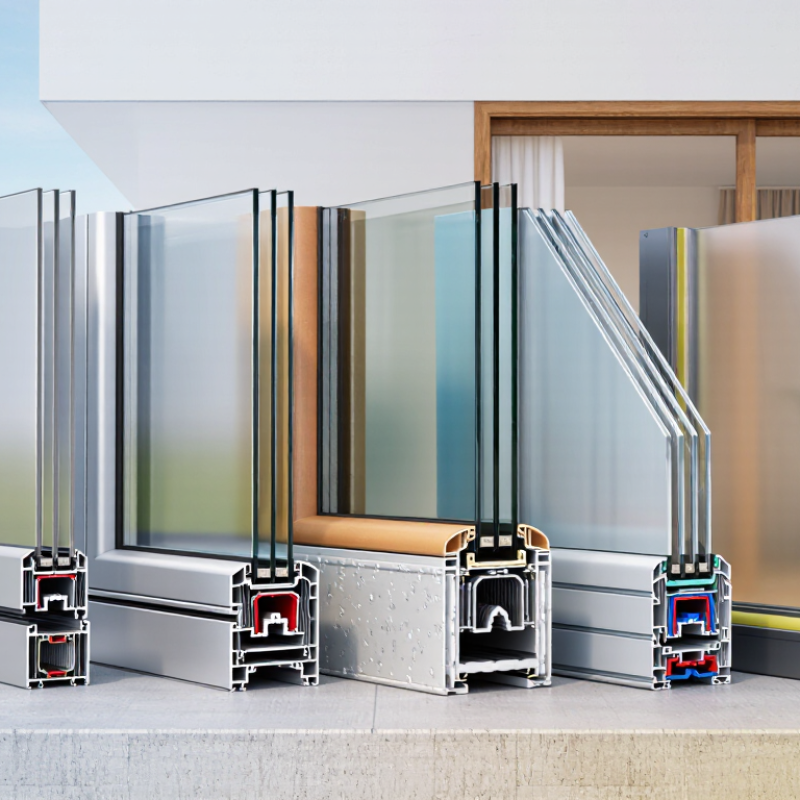
Glazing spacers sit between glass panes in an insulating glass unit. They create a controlled cavity and keep the panes evenly separated. The spacer usually contains a desiccant, which absorbs moisture inside the sealed unit. Primary and secondary sealants then protect the edge from air and gas leakage.
The common options include aluminum, stainless steel, hybrid warm-edge, and thermoplastic spacers. Aluminum is rigid and economical, but it conducts heat quickly. Stainless steel reduces this thermal bridge while retaining strong mechanical performance. Warm-edge systems use low-conductivity materials, often improving interior surface temperature near the glass edge. Thermoplastic spacers can also support flexible shapes and automated production. The choice is not always obvious.
The U.S. Department of Energy reports that windows can represent about 25% of residential heating and cooling energy use. This makes spacer design more important than its narrow profile suggests. NFRC performance evaluations consider U-factor, solar heat gain, and condensation resistance, rather than spacer material alone. Buyers should check the complete glazing system, including cavity width, gas filling, sealant compatibility, and installation quality.
Small edge defects matter. A recent industry review from the International Energy Agency also links better building envelopes with lower operational energy demand, though actual results depend heavily on climate and workmanship. Some specifications still overemphasize center-glass performance. That can mislead procurement decisions.
Top Glazing Spacer Types for Global Buyers
Choosing a glazing spacer starts with climate, not appearance. Aluminum spacers offer strength and low cost, but they conduct heat quickly. Stainless steel improves thermal performance while retaining good mechanical stability. Warm-edge composite and foam spacers reduce edge heat loss more effectively. They can also support better interior surface temperatures during cold weather.
Key Performance Factors for Selecting Glazing Spacers
Check thermal conductivity, moisture vapor transmission, and gas retention data before comparing prices. A reliable spacer should limit condensation around the glass edge. Its sealant compatibility matters just as much. Poor adhesion can cause gas leakage or premature insulating glass failure. Flexibility is important for curved units and automated production lines. Buyers should also review ultraviolet resistance, aging results, and performance across local temperature ranges. Test reports are useful, but they do not replace installation experience. A spacer may perform well in a laboratory and disappoint on a poorly prepared frame.
Tips: Request complete technical data, including tolerances and test methods. Match the spacer with the sealant and glass coating. Confirm availability in your production region. Small details matter. Do not choose only by conductivity. One weakness can affect the whole window system. Specifications sometimes look clearer than they are, so ask practical questions before approval.
Key performance factor: lower spacer-system thermal conductivity generally improves warm-edge performance and reduces heat loss at the glass perimeter.
Values shown are representative midpoints of commonly published material ranges: aluminium 160–205 W/m·K, stainless steel 14–17 W/m·K, hybrid polymer/metal 0.4–1.0 W/m·K, thermoplastic spacer 0.20–0.35 W/m·K, and silicone foam 0.04–0.08 W/m·K. Actual window performance also depends on glass configuration, frame design, gas filling, seal quality, climate, and installation.
Warm-edge spacers improve the thermal performance of insulated glass units. They separate the panes while limiting heat transfer at the glass edge. Common materials include stainless steel, thermoplastic composites, and hybrid structures. Each option balances flexibility, strength, moisture resistance, and cost differently.
A well-designed Spacer Bar can reduce interior-edge condensation during cold weather. It also supports more stable indoor temperatures near windows. Stainless steel offers strong dimensional control with relatively low conductivity. Thermoplastic spacers provide excellent insulation and can follow slight glass movement. Hybrid systems combine a rigid frame with insulating materials. Applications include homes, offices, hospitals, curtain walls, and high-performance façades. Site conditions matter. A spacer that performs well in a mild climate may need adjustment in severe winters. Laboratory results cannot replace careful installation.
Tips: Check spacer width, sealant compatibility, gas retention, and corner construction before approval. Ask for tested thermal data, not general marketing claims. Inspect sample units for uneven corners or damaged seals. Small defects can become visible condensation later. Do not ignore frame design, either. It can weaken the spacer’s benefits. I have seen projects focus heavily on glass selection while overlooking edge details. That decision often creates avoidable comfort complaints. Evaluate the complete window system, including glazing, spacer, sealants, frame, and installation quality.
Aluminum spacers remain common in insulating glass units because they are rigid, light, and easy to form. Their stable shape helps maintain a consistent cavity around the glass. During fabrication, installers can cut and bend them accurately, even for repeated production runs. This reliability supports a practical Spacer System with desiccant, primary sealant, and secondary sealant.
They also resist many handling problems. Aluminum does not rot, swell, or lose strength easily during transport. Its clean profile suits standard rectangular units and some large commercial panels. Buyers often choose it when upfront cost, familiar processing, and dimensional control matter more than peak thermal performance. It works best in mild climates, interior partitions, and projects with moderate energy targets.
The main weakness is thermal conductivity. Aluminum can create a cold bridge along the glass edge, especially during cold weather. Interior condensation may appear near the frame or spacer line. That detail is easy to miss.
In humid or heating-dominated regions, buyers should check edge temperatures, sealant compatibility, desiccant loading, and local performance requirements. A thermal break or improved spacer design may reduce heat loss, but it will not fix poor installation. I have seen good materials underperform after uneven sealant application. This is where specifications need a second review. Verify cavity width, glass thickness, corner quality, and expected service conditions before approving the order.
Hybrid and composite spacers combine low-conductivity materials with structural support. They suit insulated glass units requiring better edge performance. A typical Polymer Spacer uses a flexible polymer body and a moisture-resistant barrier. This design helps reduce heat transfer around the glass perimeter. It can also limit condensation during cold mornings.
During project reviews, buyers should check spacer width, gas retention, and sealant compatibility. These details influence service life more than appearance. A warm-edge spacer may improve interior surface temperatures, but installation quality remains critical. Uneven corners, poor pressing, or contaminated glass can weaken the sealed unit. Measure twice.
Composite designs often provide a useful balance between flexibility and mechanical stability. They can accommodate small frame movements without losing their sealing function. This matters in large windows, curtain walls, and areas with strong temperature changes. However, performance depends on the complete system, not the spacer alone. Glass thickness, cavity depth, sealants, and fabrication settings must work together.
Global buyers should request verified thermal data, dimensional tolerances, and durability testing. Regional climate also deserves attention. Humid coastal projects may need stronger moisture protection, while cold regions demand careful condensation control. Certification documents are helpful, yet they do not replace factory inspections. Some specifications look excellent on paper. Field results can still differ. A practical trial unit often reveals handling problems before large-scale production begins.
Global buyers should compare glazing spacers by verified performance, not appearance. Aluminum spacers are economical but create a stronger thermal bridge. Stainless steel and composite warm-edge designs usually reduce edge heat loss. A Thermal Spacer can also lower interior condensation risk when the frame, glass, and sealant are properly matched. The IEA’s Buildings 2023 report states that buildings consume about 30% of global final energy. Small edge improvements therefore deserve serious attention.
Standards help buyers screen suppliers across markets. EN 1279 covers insulating glass unit durability, gas retention, and moisture resistance. ASTM E2188, E2189, and E2190 assess fogging, weathering, and seal durability. NFRC 100 supports U-factor calculations for fenestration products. ISO 10077-1 is useful for thermal-transmittance evaluation. Ask suppliers for accredited laboratory reports, production-lot traceability, and declared spacer dimensions. Supplier certificates alone are not enough.
Quality checks should start with samples, not promises. Measure spacer width, corner joints, desiccant loading, and sealant adhesion. Inspect glass edges for chips before assembly. Check argon concentration after filling and repeat it after climate exposure. The U.S. Department of Energy reports that windows can represent 25–30% of residential heating and cooling energy use. That figure is often quoted without regional context. Humidity, installation quality, and shading can change the result. A spreadsheet cannot reveal a weak corner seal. Independent testing remains worth the extra time.
It separates glass panes in an insulated glass unit. It also reduces heat transfer around the glass edge.
Common choices include stainless steel, thermoplastic composites, and hybrid structures. Each balances strength, flexibility, insulation, moisture resistance, and cost differently.
They help keep the inner glass edge warmer during cold weather. This may reduce water droplets along the window perimeter.
Hybrid spacers combine a rigid support frame with insulating materials. They offer mechanical stability while allowing limited glass movement.
They suit homes, offices, hospitals, curtain walls, and high-performance façades. Large windows may benefit from their flexibility.
Check spacer width, sealant compatibility, gas retention, and corner construction. Request tested thermal data, not broad promotional claims.
No. Uneven corners, contaminated glass, or poor pressing can weaken the sealed unit. Small defects may later create visible condensation.
Yes. Cold regions require careful condensation control. Humid coastal areas may need stronger moisture protection. Mild climates need different adjustments.
Review the glass, spacer, sealants, frame, and installation quality together. I once focused too much on glass selection. That was incomplete.
A Glazing Spacer is a critical component in insulated glass units, positioned between glass panes to maintain separation and support the insulating seal. Its structure typically includes a spacer body, sealant, and desiccant, working together to reduce heat transfer, control condensation, and improve window durability. When selecting a spacer, buyers should consider thermal performance, moisture resistance, flexibility, dimensional stability, compatibility with sealants, and ease of installation.
Warm-edge spacers, often made with low-conductivity materials or advanced composites, help minimize thermal bridging and are suitable for energy-efficient residential and commercial windows. Aluminum spacers offer excellent strength, consistent dimensions, and cost efficiency, but they conduct more heat and may create colder edge zones. Hybrid and composite spacers can balance structural support with improved insulation for advanced glazing systems. Global buyers should also review applicable standards, supplier capabilities, production consistency, documentation, packaging, and quality checks such as dimensional inspection, seal integrity, and moisture-control performance.